
- Remembering Yayoi Kusama: The Visionary Behind Polka Dots and Luxury Collaborations
- Nyakio Grieco Reacquires Thirteen Lune and Outlines Global Expansion
- Leadership Transition at the British Fashion Council
- The Rise of the Influencer-Investor Model
- Meta Reaches Historic $18 Billion Settlement Over Youth Engagement
- Navigating a Changing Creative and Commercial Landscape
 Industry Briefing
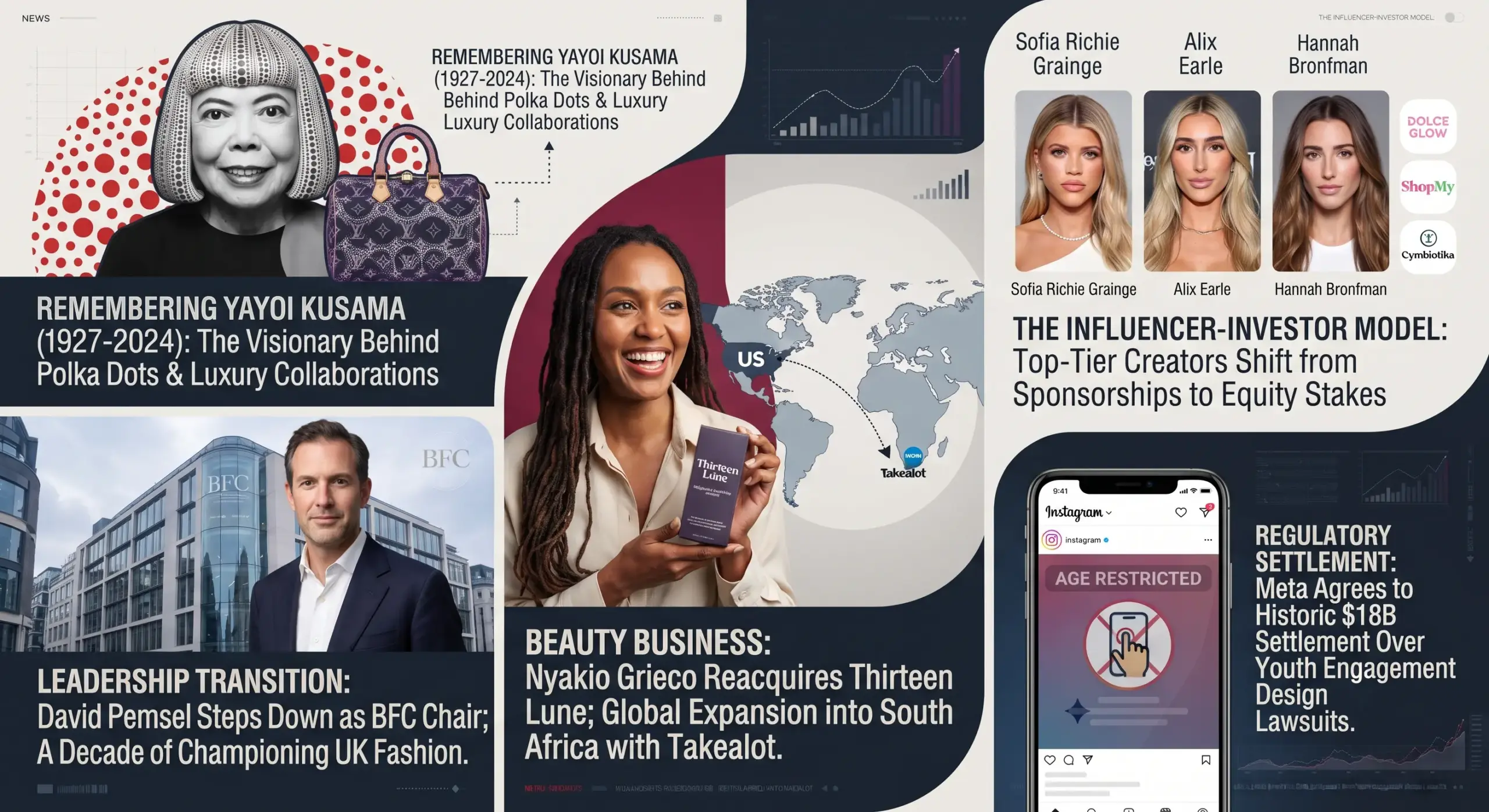
The global fashion, beauty, and digital media landscapes are experiencing pivotal shifts, marked by the passing of an avant-garde art icon, founder-led retail acquisitions, and structural shifts in creator equity. From high-profile executive transitions in London to monumental regulatory settlements affecting online platforms, today’s major updates reflect how creative expression, luxury retail, and business strategy continuously intersect.
Remembering Yayoi Kusama: The Visionary Behind Polka Dots and Luxury Collaborations
The contemporary art and luxury fashion communities are mourning the loss of Yayoi Kusama, the legendary Japanese artist who died on August 14 at the age of 97. Kusama initially rose to prominence during the late 1950s and early 1960s with her hypnotic, large-scale “Infinity Nets” paintings, alongside her distinctive phallic sculptures and signature polka-dot motifs.
Beyond her transformative contributions to modern art, Kusama made a lasting mark on designer fashion. Her major collaborations with Louis Vuitton in 2012 and 2023 translated her hypnotic visual motifs onto luxury handbags, accessories, and ready-to-wear collections. These historic partnerships set a new benchmark for fine art crossovers within the luxury sector, creating highly coveted collector pieces that bridged high art with high fashion.
For readers interested in the intersection of art, fashion, and luxury branding, the Fondation Louis Vuitton tribute to Yayoi Kusama provides additional context on her artistic legacy and relationship with the Louis Vuitton ecosystem.
Nyakio Grieco Reacquires Thirteen Lune and Outlines Global Expansion
In beauty business news, entrepreneur Nyakio Grieco has officially reacquired Thirteen Lune from investment firm SNR Capital. Financial terms of the transaction were not disclosed, but the move places full operational steering of the inclusive beauty platform back into the hands of its co-founder.
Directly following the buyback, Thirteen Lune announced its first step into international retail through a new strategic alliance with South African e-commerce platform Takealot. Set to launch on Takealot in the fourth quarter of 2026, the global expansion will feature localized marketing initiatives and interactive retail pop-ups designed to engage consumers in the region.
For additional coverage of fashion, beauty, retail, and digital commerce developments, readers can explore Pupar Mall’s online shopping guide.
Leadership Transition at the British Fashion Council
The British Fashion Council (BFC) has announced that David Pemsel will step down from his position as Chair on September 30. Pemsel’s departure marks the end of a decade-long tenure on the BFC Executive Board, including four years leading the organization as Chair.
Throughout his time at the helm, Pemsel focused on strengthening the BFC’s organizational structure, securing long-term capital investments, supporting emerging British design talent, and championing UK fashion internationally. The BFC noted that a further announcement regarding the appointment of its next Chair will be released in September.
The Rise of the Influencer-Investor Model
The dynamic between digital creators and consumer brands is undergoing a structural shift, as prominent influencers increasingly negotiate equity stakes over traditional, one-off sponsorship fees. This transition allows top-tier creators to capture long-term equity value in the consumer ventures they help build and scale.
Several high-profile examples highlight the growing momentum of creator venture capital:
- Sofia Richie Grainge has backed brands such as spray-tan venture Dolce Glow and affiliate platform ShopMy.
- Alix Earle has established early-stage positions in consumer ventures including Poppi, Gorgie, SipMargs, and Cymbiotika.
- Hannah Bronfman has emerged as a prolific angel investor, backing more than 70 early-stage startups across fashion, tech, and wellness.
This move toward equity ownership reflects a broader realization across the fashion business that top-tier digital figures generate measurable, long-term commercial impact that extends well beyond short-term promotional campaigns.
For broader context on the creator-investor model, Vogue’s analysis of the rise of the influencer-investor examines how creators are increasingly moving beyond traditional brand partnerships and into ownership positions.
Meta Reaches Historic $18 Billion Settlement Over Youth Engagement
In digital ecosystem news, Meta has agreed to pay up to $18 billion in combined settlements to resolve U.S. state lawsuits. The core of the legal claims centered on allegations that Meta engineered features on Instagram and Facebook to drive compulsive platform usage among younger audiences.
Up to $16.7 billion of the total settlement addresses multi-state claims regarding platform design and youth engagement. Under the binding terms, Meta must enforce limits on youth scroll time and prevent young users from changing core safety settings without explicit parental consent—a regulatory shift likely to influence how fashion and lifestyle labels execute digital advertising to younger audiences.
Meta’s official announcement regarding the agreement with bipartisan attorneys general provides additional information about the settlement and its proposed youth-safety measures.
Navigating a Changing Creative and Commercial Landscape
As the fashion and retail sectors adjust to these macro changes—honoring Yayoi Kusama’s legacy, seeing direct-to-consumer beauty models mature under founder leadership, and observing the evolution of creator equity—the connection between cultural influence and strategic ownership remains clear. Whether through global retail expansion, leadership transitions, or changing digital advertising frameworks, today’s developments illustrate how rapidly the fashion business ecosystem continues to adapt.
Readers can continue exploring fashion, beauty, retail, and online shopping trends on Pupar Mall for additional industry analysis and consumer-focused stories.

Related Posts
Elie Saab x H&M Collaboration Lebanese fashion house Elie Saab
ashaki Designing Heirloom Fashion Based in San Francisco, apparel brand
Victoria’s Secret Reports Q2 Sales Spike The global fashion and

The Lede Company Is Hiring a The Lede Company, a
 WhatsApp
 Messenger
 Phone
Phone