
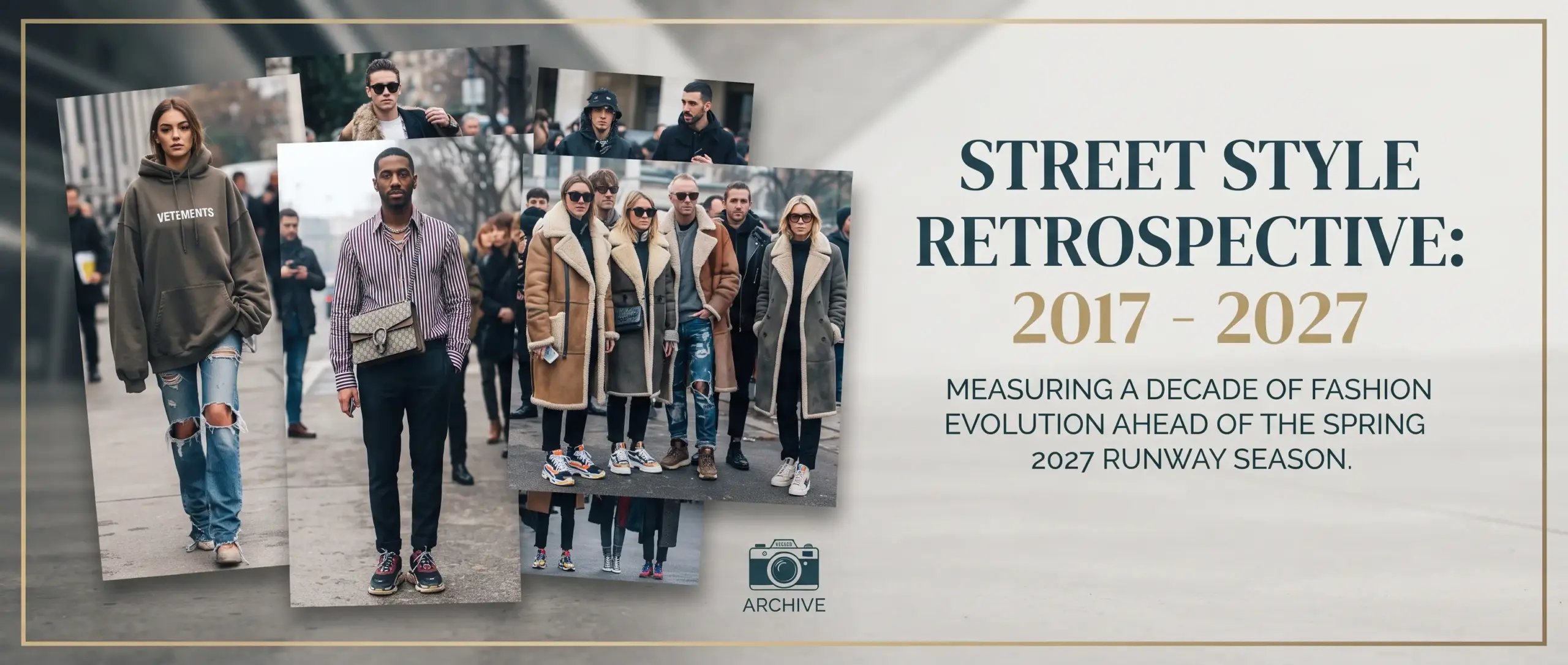
 Street Style Rewind
As the global fashion community prepares for the upcoming Spring 2027 runway season, casting a look back a decade provides a fascinating lens through which to measure the evolution of personal presentation and industry trends. Revisiting the street style worn outside the collections in 2017 highlights how show attendees, editors, and industry insiders interpreted the climate of design ten years ago, offering a clear view of how fashion imagery and real-world dressing have shifted over time.
The Ten-Year Reflection: Looking Back at 2017 Street Style
In fashion analysis, a decade-long retrospective serves as an essential benchmark. Taking time to review what was prominent on the streets in 2017 allows observers to contextualize today’s aesthetic movements against those of the past. Street style acts as a real-time record of cultural shifts, documenting how trends debuted on the runways were immediately adopted, modified, or recontextualized by show-goers outside the venues.
Looking back ten years reveals how individual expression and seasonal demands interacted during that specific era. Rather than relying solely on polished brand lookbooks or controlled ad campaigns, street photography captures fashion in motion, showing how textiles, silhouettes, and styling techniques functioned in everyday life.
The Function of Street Style Archives in Modern Fashion
Street style photography has evolved into a vital historical archive for the fashion industry. Beyond providing inspiration for daily dressing, these visual records document the changing dynamics between luxury houses, high-street influences, and personal styling.
Key reasons why historical street style coverage remains relevant include:
- Documentation of authentic styling: It records how individuals combined high fashion with vintage or casual garments outside formal show environments.
- Tracking visual evolution: It offers clear documentation of shifting proportions, color palettes, and accessory trends over extended periods.
- Contextualizing fashion cycles: It illustrates how micro-trends emerge, spread through show attendees, and eventually give way to new aesthetic directions.
By examining images from a decade prior, commentators and consumers can better identify which design concepts proved to have lasting influence and which were localized strictly to that moment in time.
Analyzing the Evolutionary Cycle of Show-Goer Style
The fashion system relies heavily on cyclical references, with ideas frequently being reassessed and repurposed across ten- and twenty-year intervals. Reviewing the street style of 2017 ahead of the Spring 2027 collections underscores this rhythmic movement. What appeared modern and spontaneous ten years ago now serves as a historical reference point, informing how current show-goers approach dressing for presentations.
Analyzing past street style permits a deeper understanding of how public spaces outside fashion shows became secondary runways of their own. As industry professionals gather for the next wave of collection reveals, the legacy of past street style continues to influence how clothes are presented, photographed, and understood on a global scale.
Revisiting the street style of 2017 ahead of the Spring 2027 show season emphasizes the lasting importance of street photography as a cultural record. By examining how the fashion set dressed a decade ago, industry observers gain valuable perspective on the continuous dialogue between design vision and real-world execution.

Related Posts
Venice Film Festival 2026 As the 2026 Venice Film Festival
Celebrity Style Snapshot As fashion cycles shift between seasons, red
Ever Anderson Makes Her Venice Film Ever Anderson, the rising
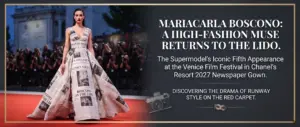
Mariacarla Boscono Steps Out at the Supermodel Mariacarla Boscono made
 WhatsApp
 Messenger
 Phone
Phone