
- The Core Philosophy of an Everyday Wardrobe
- Essential Tops: Building Your Foundation
- Bottom Wear: The Anchors of Your Style
- Outerwear: Adding Depth and Texture
- Footwear: Grounding Your Outfit
- Essential Fashion Tips and Accessories
- Smart Shopping Strategies & E-Commerce Tips
- Practical Casual Outfit Ideas for Daily Life
- Final Thoughts: Developing Personal Style
- Frequently Asked Questions
 men’s fashion guide
Standing in front of a closet overflowing with clothes while feeling like you have absolutely nothing to wear is a frustratingly common experience. Most men do not suffer from a lack of clothing; they suffer from a lack of cohesion. A wardrobe filled with impulse buys, graphic tees from years ago, and mismatched trousers makes getting dressed every morning far more complicated than it needs to be.
Building a stylish, versatile everyday wardrobe does not require a massive budget or a degree in design. It requires a clear strategy focused on fit, versatility, and timeless fundamentals. Whether you are starting from scratch or looking to refine your personal style, this comprehensive men’s fashion guide will walk you through the essential steps to curate a closet that works for your lifestyle, effortlessly.
The Core Philosophy of an Everyday Wardrobe
Before rushing out to buy new clothes, it is essential to understand the foundation of good style. A great wardrobe is built on three main pillars: Fit, Color Neutrality, and Fabric Quality.
1. Fit Is Everything
Even the most expensive suit or designer jacket will look unflattering if the fit is off. Conversely, inexpensive, well-fitted garments can look exceptionally polished.
- The Shoulders: On tops, shirts, and jackets, the shoulder seam should sit right where your arm meets your shoulder.
- The Chest: Clothes should hug your body comfortably without pulling across the buttons or feeling tight across the back.
- The Trousers: Pants should sit comfortably around your waist without requiring a belt to stay up. The hem should hit the top of your shoe with a clean, minimal break.
2. Focus on a Neutral Color Palette
To maximize versatility, base your wardrobe around neutral colors: navy, gray, white, black, beige, and olive. These shades naturally complement each other, allowing you to pick almost any top and bottom combination in the dark without worrying about a color clash. Once your neutral foundation is established, you can introduce accent colors like burgundy, rust, or mustard yellow.
3. Prioritize Fabric Quality Over Quantity
A small collection of well-constructed garments made from natural fibers—such as cotton, linen, wool, and leather—will last significantly longer and look vastly superior to cheap synthetic blends. High-quality natural fabrics breathe better, drape better on the body, and age gracefully over time.
Essential Tops: Building Your Foundation
Tops make up the most visible portion of your daily outfit. When putting together wardrobe ideas for your upper half, focus on classic silhouettes that transition smoothly between casual and semi-formal settings.
Premium Crew Neck T-Shirts
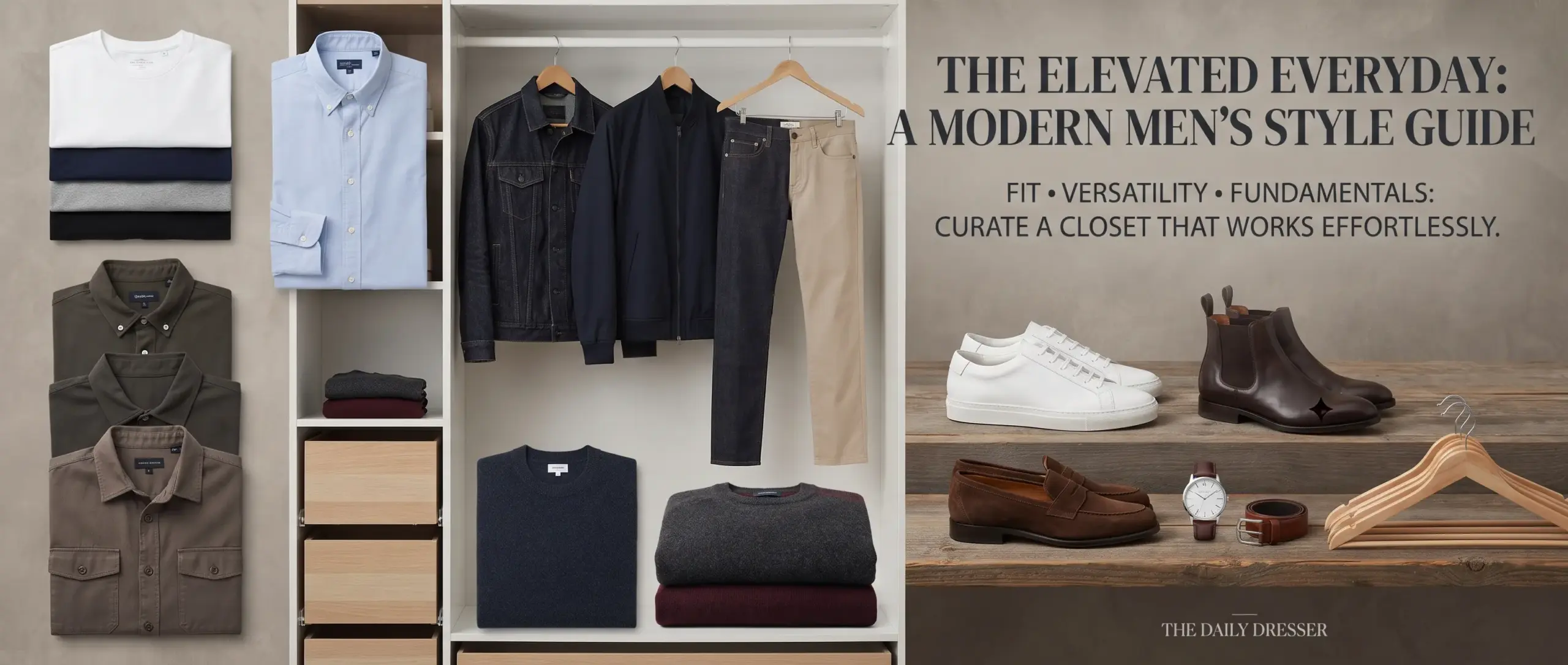
A plain, high-quality crew neck t-shirt is the absolute backbone of casual style. Avoid loud logos or massive graphic prints. Instead, invest in mid-weight cotton t-shirts in classic neutral tones: white, navy, black, and heather gray. Look for combed or Pima cotton, which offers a soft hand-feel and resists shrinking after repeated washes.
The Classic Oxford Cloth Button-Down (OCBD)
If you could only own one collared shirt for the rest of your life, The Oxford Cloth Button-Down would be a prime contender. This classic American menswear staple has remained influential because of its versatility and connection to traditional preppy style. The textured weave gives it a rugged yet refined appearance, making it equally suitable worn untucked with jeans or tucked into tailored chinos. Start with light blue and crisp white.
Polos and Henleys
When a t-shirt feels too casual but a woven button-down feels too formal, polos and henleys bridge the gap perfectly:
- Polo Shirts: Stick to cotton pique or knitted fabrics with a clean, structured collar. Dark navy, olive, and charcoal polos add instant refinement.
- Henley Shirts: Featuring a collarless placket with two to four buttons, the henley adds subtle texture and a masculine vibe to a casual weekend fit.
Casual Overshirts (Shackets)
An overshirt is a heavy-duty shirt designed to be worn unbuttoned over a t-shirt or tank top. Made from heavy cotton twill, flannel, or corduroy, overshirts provide depth, structure, and excellent layering capability during transitional weather.
Bottom Wear: The Anchors of Your Style
A well-rounded clothing guide must address lower-body essentials. Owning three or four reliable pairs of trousers in distinct cuts and fabrics will cover almost every non-formal occasion.
Dark Denim Jeans
Jeans are an indispensable casual wardrobe staple, but not all denim is created equal. Learning about denim construction, washes, and craftsmanship can help shoppers identify better-quality pieces, as demonstrated by heritage denim specialists like Levi’s. For maximum versatility, choose slim-straight or tailored straight-leg jeans in a dark indigo or black wash with minimal distressing or artificial fading. Dark denim pair effortlessly with t-shirts, leather jackets, and blazers alike.
Tailored Chinos
Chinos are the ultimate versatile trousers. They offer the comfort of cotton with the clean look of dress pants. Keep at least two pairs in your rotation:
- Flat-front Khaki/Beige Chinos: A classic choice for preppy or casual business environments.
- Navy or Olive Chinos: Excellent dark alternatives that pair brilliantly with lighter-colored tops and white sneakers.
Well-Fitted Shorts
During warmer months, cargo shorts and oversized athletic shorts should be set aside in favor of tailored flat-front shorts. Aim for a hem that sits 1 to 2 inches above the knee (typically a 7-inch to 9-inch inseam). Neutral tones like beige, navy, and slate gray are easiest to style.
Outerwear: Adding Depth and Texture
Outerwear does more than keep you warm—it acts as the focal point of your entire outfit. Adding structure through layering is one of the easiest ways to elevate your look.
The Denim Jacket
A classic trucker jacket in a medium or dark blue wash adds instant character to any outfit. Pair it with chinos, black jeans, or over a hoodie for a modern, layered look. (Pro tip: Avoid wearing denim of the exact same wash on both your top and bottom halves unless you are deliberately going for a rugged monochromatic look.)
The Minimalist Bomber Jacket
Originally designed for pilots, the modern bomber jacket has evolved into a sleek outerwear essential. Opt for a clean design in navy, black, or dark green without excessive patches, bold zippers, or contrasting elastic bands.
Lightweight Knitwear and Cardigans
A crewneck merino wool sweater or a button-up cotton cardigan is essential for cool evenings and climate-controlled office spaces. Fine-knit sweaters can be worn directly over t-shirts or layered above an Oxford shirt for a smart-casual office look.
Footwear: Grounding Your Outfit
You can put together a great shirt and pants, but the wrong pair of shoes can immediately derail your whole look. Your footwear collection does not need to be massive, but it does need to cover different levels of formality.
Minimalist White Leather Sneakers
A pair of clean, low-top white leather sneakers is arguably the most versatile footwear a man can own. They look sharp with raw denim, tailored chinos, and even casual cotton suits. Keep them clean with regular maintenance to ensure they look sharp.
Leather Chelsea or Chukka Boots
When you want something more rugged or formal than a sneaker, boots step up to the plate. Dark brown or black leather Chelsea boots feature a slim silhouette that fits neatly under trousers, making them an ideal footwear option from autumn through spring.
Casual Loafers or Suede Derbies
Suede penny loafers or unlined derby shoes introduce texture to your lower half. They are ideal for warm weather, smart-casual dress codes, and dinner outings where sneakers feel too casual.
Essential Fashion Tips and Accessories
Accessories are the subtle details that turn a simple outfit into a memorable style statement. They demonstrate effort, attention to detail, and personality.
1. Match Your Leathers
When wearing casual dress shoes or boots, match the color of your leather belt to your shoes. If you are wearing brown leather shoes, wear a brown leather belt. While exact color matches are not mandatory for casual wear, sticking close to the same tone creates visual harmony.
2. Wear an Everyday Watch
In a world dominated by smartphones, a classic analog watch remains a powerful style marker. A simple 38mm to 42mm watch with a stainless steel case and a versatile leather or metal strap adds sophistication without trying too hard.
3. Keep Graphic Branding Minimal
Large logos, flashy brand names, and busy graphic prints distract from your overall silhouette and make garments harder to mix and match. Prioritize subtle textures, clean weaves, and solid colors.
4. Invest in Proper Garment Care
Building a great wardrobe is only half the battle; taking care of your clothes is the other half.
- Wash less frequently: Wash denim and outerwear only when visibly dirty or odorous to preserve fabric integrity.
- Air dry when possible: High heat from dryers damages elastic fibers and causes cotton garments to shrink.
- Use quality hangers: Wooden or velvet hangers maintain the shape of your shirts and jackets far better than thin wire hangers.
Smart Shopping Strategies & E-Commerce Tips
Smart shopping is about acquiring quality pieces that fit your body and your lifestyle without overspending. Modern shoppers increasingly rely on digital storefronts to build their wardrobes, which comes with unique advantages and potential pitfalls.
For instance, shoppers navigating online shopping Bangladesh options or international e-commerce platforms must pay close attention to garment specifications, regional sizing variations, and fabric compositions suitable for local weather conditions.
Accurate Measurements Are Essential
Never buy clothing online based solely on size labels like “M” or “L,” as sizing varies wildly across brands and manufacturers.
- Use a soft tape measure to record your chest circumference, natural waistline, shoulder width, and inseam length.
- Compare your actual body measurements against the specific garment sizing charts provided on the product page.
Choose Climate-Appropriate Fabrics
Depending on where you live, regional weather plays a massive role in fabric selection. For warm or humid climates, emphasize lightweight, breathable weaves:
- 100% Breathable Cotton: Linen blends and open-weave cottons (like poplin and slub cotton) allow airflow and prevent overheating.
- Moisture-Wicking Knits: Natural bamboo or lightweight modal blends offer cooling properties for active daily routines.
Read Reviews and Verify Return Policies
Before purchasing garments online, review customer feedback regarding color accuracy, stitch quality, and shrink rates. Ensure the online retailer provides a clear return or exchange policy so you can easily swap sizes if the fit isn’t spot-on.
Practical Casual Outfit Ideas for Daily Life
To help you visualize how these core pieces work together, here are three simple, failsafe outfit blueprints for various daily scenarios.
Outfit 1: The Everyday Weekend Casual
- Top: Heavyweight white crew-neck t-shirt.
- Outerwear: Unbuttoned dark blue denim jacket or olive overshirt.
- Bottom: Tapered black jeans.
- Footwear: Crisp white leather sneakers.
- Vibe: Effortless, comfortable, clean, and modern.
Outfit 2: The Smart Casual Office / Date Night
- Top: Light blue Oxford Cloth Button-Down shirt (sleeves rolled up slightly).
- Bottom: Tailored olive or khaki chinos.
- Footwear: Dark brown leather Chelsea boots or suede derbies.
- Accessory: Leather-strap watch matching your boot color.
- Vibe: Professional, put-together, approachable, and versatile.
Outfit 3: The Elevated Summer Evening
- Top: Dark navy or black fitted polo shirt.
- Bottom: Light gray tailored cotton trousers or clean chino shorts.
- Footwear: Brown suede loafers worn with no-show socks.
- Vibe: Sharp, cool, refined, and ideal for warm weather gatherings.
Final Thoughts: Developing Personal Style
Building a stylish everyday wardrobe is a marathon, not a sprint. You do not need to replace your entire closet overnight. Start by purging ill-fitting or damaged garments, identifying the gaps in your basic rotation, and gradually adding high-quality, versatile essentials that suit your daily routine.
Remember, true style comes down to confidence, fit, and simplicity. When your clothes fit your body comfortably and coordinate effortlessly, getting dressed becomes an enjoyable part of your day rather than a chore. Focus on the fundamentals, pay attention to the details, and let your personal style evolve naturally.
Frequently Asked Questions
What are the essential clothing items every man needs to build a versatile wardrobe?
Building a functional collection starts with timeless basics that you can easily mix and match. A modern men’s fashion guide always recommends investing in high-quality staple items. Start with neutral crew-neck t-shirts, well-fitted dark denim jeans, versatile chinos, a classic oxford button-down shirt, and clean white sneakers. Layering pieces, such as a tailored denim jacket or a sleek navy blazer, will instantly elevate your look. By focusing on these core wardrobe ideas, you create a solid foundation for endless stylish combinations without feeling overwhelmed. Furthermore, prioritizing proper fit over fleeting trends ensures you always look sharp and put-together for any everyday occasion.
How can I easily transition my everyday outfits from casual to smart-casual?
Transitioning your style requires small, intentional upgrades rather than a complete makeover. Essential fashion tips often suggest swapping basic t-shirts for fitted polo shirts or structured button-downs. You can also replace casual running shoes with leather loafers, suede boots, or minimalist leather sneakers. Adding a lightweight sweater, a stylish leather belt, or a tailored jacket immediately enhances your overall silhouette. If you are looking for versatile casual outfit ideas, try pairing dark-wash denim with a crisp white shirt and a tailored blazer. This effortless approach allows you to seamlessly shift from a relaxed daytime environment to a sophisticated evening dinner with confidence.
How do I choose clothing that flatters my specific body type?
Understanding your body shape is the key to selecting clothes that enhance your natural proportions. A comprehensive clothing guide emphasizes that fit is far more important than brand names or price tags. Slimmer men can benefit from subtle layering and structured fabrics to add dimension, while broader men should opt for clean, vertical lines and tailored cuts that avoid extra bulk. Always pay close attention to shoulder seams, sleeve lengths, and trouser breaks. Utilizing a practical men’s fashion guide will help you identify silhouette-enhancing pieces that boost your comfort and confidence. When your clothes fit correctly, even the simplest outfit looks intentionally stylish and refined.
What key factors should I consider when buying men’s clothing online?
Online shopping offers incredible convenience, but it requires careful attention to detail to ensure the perfect fit. Always take your accurate body measurements—such as chest, waist, and inseam—and compare them against the specific brand size chart before ordering. Reading customer reviews provides valuable insights regarding fabric quality, color accuracy, and true-to-size fitting. If you are exploring online shopping Bangladesh platforms, look for reputable retailers that offer clear return policies, detailed product descriptions, and high-resolution images. Additionally, stick to versatile colors like navy, grey, black, and olive, as these shades are easier to match and rarely look different in person.
How do I properly care for my garments to make them last longer?
Proper garment maintenance is essential for preserving the fit, color, and texture of your clothing over time. Following simple fashion tips can significantly extend the lifespan of your favorite everyday pieces. Wash your clothes in cold water with mild detergent, and air-dry items whenever possible to prevent shrinkage and fabric degradation. Use wooden or padded hangers for jackets and dress shirts to maintain their structural integrity, and fold heavy knitwear to avoid stretching. Regularly trimming loose threads and polishing your leather footwear will keep your entire collection looking brand new. Taking great care of your garments protects your financial investment and keeps you stylish.

Related Posts
how to style a t-shirt Every wardrobe has one item

capsule wardrobe for everyday wear Standing in front of a

how to style basic clothes Most people believe that looking

neutral colors for outfits Standing in front of a closet
 WhatsApp
 Messenger
 Phone
Phone