
- The Core Principles of Body Shape Styling
- How to Accurately Determine Your Body Shape
- Styling Strategies for Women's Body Shapes
- Flattering Clothes for Men: Dressing for Your Body Type
- Essential Clothing Fit Guide: Key Details to Notice
- Fabric, Texture, and Pattern Mechanics
- Practical Outfit Ideas for Different Body Types
- The Role of Alterations in Achieving Perfect Fit
- Final Thoughts: Building Confidence Through Style
- Frequently Asked Questions
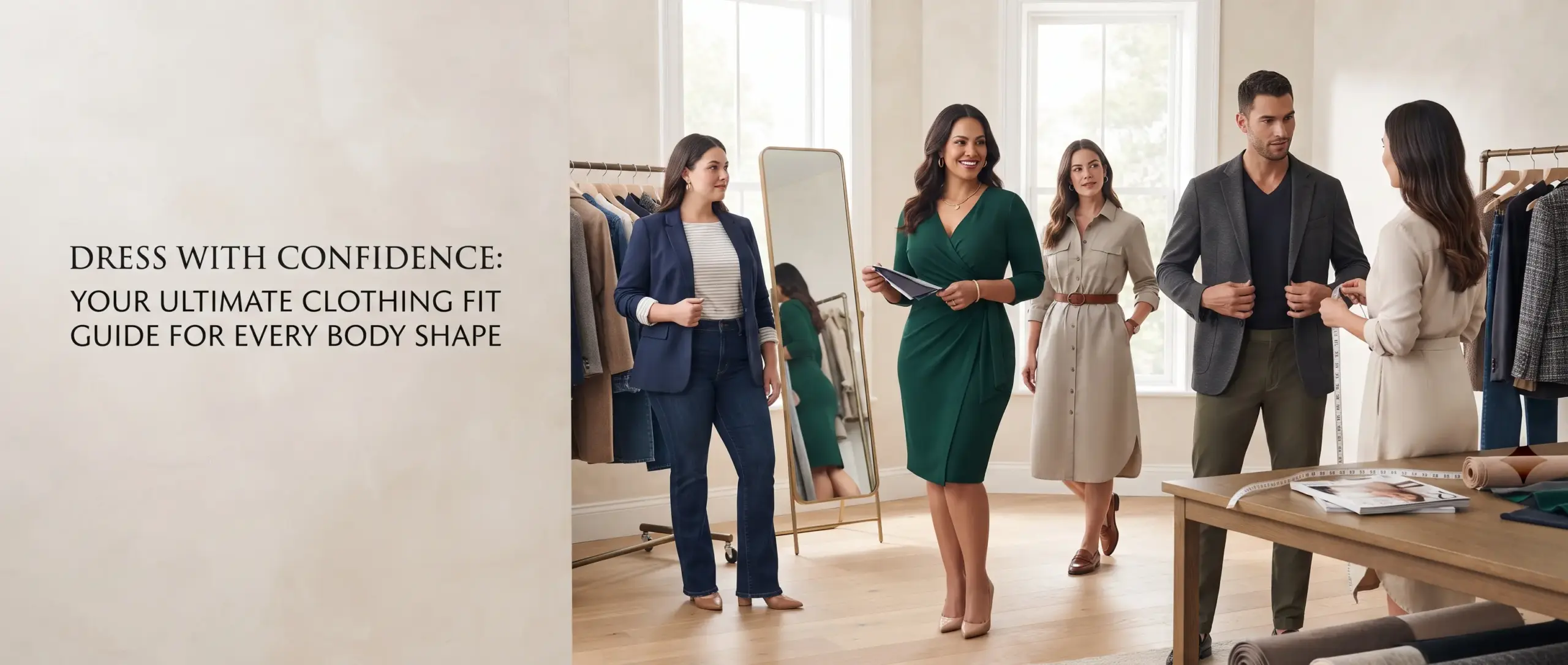 clothes for your body shape
Have you ever found a garment on a hanger that looked absolute perfection, only to feel disappointed the moment you tried it on in the fitting room? It is one of the most common frustrations in personal style, yet the problem rarely lies with your body. More often than not, it comes down to a mismatch between the cut of the garment and your natural silhouette.
Learning how to choose clothes for your body shape is not about adhering to strict, outdated fashion rules or trying to conform to a specific standard. Instead, it is about understanding proportion, optical balance, and fit. When you know how fabrics, cuts, and patterns interact with your natural frame, shopping becomes vastly easier, less overwhelming, and significantly more rewarding.
Whether you are looking to build a streamlined capsule wardrobe, upgrade your daily outfit choices, or discover practical men’s fashion tips, this comprehensive clothing fit guide will walk you through everything you need to know to dress with confidence. Explore more fashion and styling guides for additional wardrobe inspiration, trends, and practical dressing advice.
The Core Principles of Body Shape Styling
Before diving into specific body shapes, it helps to understand the underlying mechanics of personal styling. Dressing for your body shape is essentially an exercise in visual balance. Fashion designers use line, color, texture, and volume to guide the eye; you can use those exact same tools when getting dressed each morning.
Visual Balance and Proportions
Visual balance is the idea of creating harmony between your upper and lower body. If your shoulders are considerably broader than your hips, balance means adding visual volume to your lower half or softening the shoulder line. Conversely, if your hips are wider than your torso, balance involves drawing attention upward toward your face and shoulders while streamlining the lower half.
Strategic Focal Points
Every outfit creates focal points—areas where the eyes naturally land first. You can control where these points are through:
- Color and Contrast: Bright colors, light shades, and bold patterns attract attention, while dark tones and muted shades visually recede.
- Texture and Detail: Ruffles, pocket details, pleats, and bulky knits add visual weight, while smooth, flat fabrics maintain a clean profile.
- Necklines and Hemlines: The shape of a neckline frames your face, while where a hemline lands draws a horizontal line across that part of your body.
How to Accurately Determine Your Body Shape
To apply effective body shape styling tips, you first need an accurate baseline. Weight fluctuates, but your skeletal structure—the relative width of your shoulders, bust or chest, waist, and hips—remains fairly constant.
To find your primary body shape, take a flexible measuring tape and take four basic measurements. Accurate body measurements are also an important foundation when selecting properly fitting clothing, as explained in textile and garment education resources that cover apparel construction and sizing principles.
- Shoulders: Measure around the highest point of your shoulders, keeping the tape flat.
- Bust / Chest: Measure around the fullest part of your chest or bust line.
- Waist: Measure around the narrowest part of your natural waist (usually just above the navel).
- Hips: Measure around the fullest part of your hips and seat.
Once you have these measurements, compare the ratios:
- Hourglass: Shoulder/bust and hip measurements are nearly equal, with a significantly narrower waist.
- Pear (Triangle): Hips are visibly wider than shoulders and bust/chest.
- Inverted Triangle: Shoulders and chest are wider than hips and waist.
- Rectangle (Column/Athletic): Shoulders, chest, waist, and hips are relatively uniform in width with minimal waist definition.
- Apple (Round/Oval): Weight is concentrated around the midsection, with shoulders and hips appearing narrower in comparison.
Styling Strategies for Women’s Body Shapes
Understanding your structural frame allows you to choose cuts that highlight your natural features while creating effortless symmetry.
1. The Hourglass Body Shape
The goal for an hourglass frame is to celebrate the natural balance while keeping the defined waist as the focal point. Clothing that hangs loosely from the shoulders can hide your shape and create a boxy appearance.
- Best Tops: Fitted tees, wrap tops, scoop necklines, V-necks, and tailored button-downs.
- Best Bottoms: High-waisted wide-leg trousers, pencil skirts, and straight-leg or bootcut jeans.
- Best Dresses: Wrap dresses, tailored sheath dresses, and belted shirt dresses.
- Styling Tip: Avoid heavy embellishments or bulky details across both the bust and hips simultaneously, as this can disrupt your natural proportions.
2. The Pear (Triangle) Body Shape
With a pear shape, the lower body is wider than the upper body. The key to dressing this body shape is building subtle width around the shoulders and chest while creating a clean, elongated line through the hips and thighs.
- Best Tops: Boatneck tops, off-the-shoulder cuts, statement sleeves, puff sleeves, and horizontal stripe patterns.
- Best Bottoms: A-line skirts, flat-front wide-leg pants, and dark-wash straight jeans.
- Best Jackets: Cropped jackets that hit right above the hip line, or mid-thigh tailored coats.
- Outfit Idea: Pair a patterned, boat-neck blouse with dark indigo bootcut jeans and a structured blazer to draw the eye upward.
3. The Inverted Triangle Body Shape
If your shoulders and bust are noticeably wider than your hips, your goal is to soften the shoulder area and add volume or shape to your lower half to create an balanced frame.
- Best Tops: V-neck tees, raglan sleeves, halter necklines, and soft, fluid fabrics that drape gently without adding shoulder bulk.
- Best Bottoms: Pleated skirts, wide-leg trousers, flared jeans, cargo pants, and bright or patterned bottoms.
- Best Outerwear: Unstructured blazers, cardigan sweaters, and coats with lower pocket details.
- Styling Tip: Keep top layers clean and minimal while using bold patterns, pleats, or brighter colors on your lower half.
4. The Rectangle Body Shape
A rectangle body shape features a balanced proportion between shoulders, waist, and hips, creating an athletic silhouette. Styling for this shape often involves creating the illusion of curves and defining the waist line.
- Best Tops: Peplum tops, sweetheart necklines, layered shirts, and tops with ruffle or pocket details.
- Best Bottoms: Trousers with paperbag waists, pleated pants, and skirts with movement like tiered or pleated designs.
- Best Dresses: Belted shirt dresses, fit-and-flare styles, and wrap dresses that create waist definition.
- Styling Tip: Use belts over jackets, coats, and dresses to instantly create a clear visual break between your upper and lower body.
5. The Apple Body Shape
Apple body shapes carry weight predominantly around the midsection, often paired with great legs and a full bust. The styling strategy here focuses on elongating the torso, drawing attention to the legs and neckline, and creating long, uncluttered vertical lines.
- Best Tops: Empire waist tops, tunic blouses, longline cardigans, and deep V-necks.
- Best Bottoms: Straight-leg trousers, bootcut pants, and skirts that hit right at the knee.
- Best Outerwear: Open-front jackets, tailored blazers that hit below the hip, and vertical-stripe dusters.
- Styling Tip: Monochromatic outfits—wearing varying shades of the same color from top to bottom—create a continuous vertical line that elongates the entire body.
Flattering Clothes for Men: Dressing for Your Body Type
Men’s tailoring is heavily based on shoulder-to-waist ratios and structural balance. Finding flattering clothes for men comes down to selecting cuts that complement shoulder width, torso length, and leg proportions.
1. The Inverted Triangle (Athletic Build)
Men with broad shoulders and a narrow waist often struggle with off-the-rack clothing. Standard shirts tend to fit the shoulders while pooling around the waist, while slim fits might be too tight across the back.
- Shirts: Look for “fitted” or “tailored” cuts rather than extreme slim fits or boxy classic fits. V-neck t-shirts and open-collar polos look naturally flattering.
- Jackets: Soft-shouldered or unstructured blazers that taper gently toward the waist.
- Trousers: Straight-leg or relaxed-taper pants. Avoid overly skinny jeans, which can make your upper body look top-heavy.
2. The Rectangle (Slim or Column Build)
For men with a straight frame where shoulders, waist, and hips are aligned, the objective is to add structure, shoulder width, and visual texture.
- Layering: Layering is one of the most practical men’s fashion tips for this build. Try pairing a crew-neck sweater over a button-down shirt.
- Jackets: Choose blazers with subtle shoulder padding and structured lapels to widen the chest area visually.
- Fabrics: Heavyweight fabrics like tweed, flannel, corduroy, and textured knits add physical dimension to your frame.
3. The Trapezoid (Balanced Build)
The trapezoid shape features broad shoulders tapering down to a moderately narrower waist. Most off-the-rack men’s clothing is designed around this baseline proportion.
- Styling Approach: Focus on proper clothing fit rather than trying to adjust proportions. Clean lines, tailored fits, and classic proportions work seamlessly.
- Wardrobe Essentials: Well-fitted chinos, classic crew-neck t-shirts, structured suit jackets, and slim-straight denim.
4. The Triangle (Wider Waistline)
If your shoulders are narrower than your waist and hips, the goal is to broaden the shoulder profile while visually streamlining the midsection.
- Jackets: Single-breasted, structured jackets are your best ally. They create defined shoulders and an elongated chest line.
- Colors: Darker shades (navy, charcoal, black) on top help streamline the torso.
- Trousers: Medium-to-high-rise trousers that sit at your natural waist rather than under the stomach. Straight-leg cuts create an uninterrupted vertical line.
5. The Oval (Rounder Build)
For men carrying weight through the center frame, the goal is to stretch the visual silhouette vertically while avoiding clinging fabrics.
- Shirts: Vertical stripes, dark solid colors, and unbuttoned shirt-jackets worn open over a simple tee.
- Fit Tip: Ensure clothes fit comfortably without extra sag or stretch. Clothes that are too large make you look bigger, while clothes that are too tight highlight unwanted bulges.
- Tailoring: Ensure trouser hemlines break lightly over shoes to maintain a clean vertical drape.
Essential Clothing Fit Guide: Key Details to Notice
Regardless of your specific body shape, an exceptional fit is what elevates an outfit from simple to refined. Pay attention to these universal fit checkpoints when evaluating your clothes:
1. The Shoulder Seam
On jackets, shirts, and structured tops, the shoulder seam should sit directly where your shoulder bone meets your arm. If the seam droops down your arm, the garment is too large; if it pulls tight across your upper back, it is too small.
2. The Waistband
Your waistband should sit comfortably without digging into your skin or requiring a belt pulled to its tightest loop to stay up. High-rise bottoms elongate legs, mid-rise suits most frames naturally, and low-rise cuts work best for long-torso silhouettes.
3. Trouser Rise and Hem Line
- No Break: The pant cuff sits just above the shoe, creating a sleek, contemporary look.
- Slight Break: The trouser hem rests lightly on top of the shoe, forming a subtle fold. This is a classic, universally flattering drape.
- Full Break: The fabric sags noticeably at the ankle, which can shorten the leg line visually.
Fabric, Texture, and Pattern Mechanics
Understanding fabric behavior is essential when figuring out how to dress for your body shape. Different fabrics create different shapes on the body. Learning more about textile properties, fiber characteristics, and fabric performance through resources such as the Fabric School textile education platform can help shoppers make more informed clothing choices.
Heavy vs. Fluid Fabrics
- Heavyweight Fabrics (Denim, tweed, leather, wool flannel): These materials hold their own shape rather than taking on the shape of your body. Use them where you want to add structure, broadness, or smooth coverage.
- Fluid Fabrics (Silk, rayon, modal, fine knits): These fabrics drape over natural contours. They are ideal for highlighting curves, softening broad angles, and keeping layers light.
Print and Pattern Scale
The size of a pattern should align with your overall frame size and your styling goals:
- Small Patterns (Micro-checks, small florals, fine pin-stripes): Visually subtle, these patterns suit smaller frames or areas you prefer to keep muted.
- Large Patterns (Bold plaids, wide stripes, large florals): These draw attention and add visual volume, making them great for areas you want to highlight or broaden.
Practical Outfit Ideas for Different Body Types
To bring these principles together, here are practical outfit formulas designed for everyday wear:
Casual Outfit Ideas
- For a Pear Shape: A white puff-sleeve top paired with medium-wash straight-leg jeans, tan ankle boots, and a gold pendant necklace.
- For an Inverted Triangle Shape: A simple navy V-neck t-shirt tucked into a beige pleated midi skirt, finished with low-profile leather sneakers.
- For a Rectangle Shape: A light-knit sweater tucked into paperbag-waist chinos, finished with a classic leather belt and loafers.
Smart Casual & Workwear Outfit Ideas
- For Men with a Triangle Build: A dark navy single-breasted blazer worn over a crisp white button-down, charcoal straight-leg trousers, and dark brown leather dress shoes.
- For Men with a Rectangle Build: A textured tweed jacket paired with a thin-knit crewneck, tailored slim-fit trousers, and suede Chelsea boots.
- For an Apple Shape: A deep-green wrap-style blouse paired with dark-wash straight-leg trousers, a longline blazer, and pointed-toe flats.
The Role of Alterations in Achieving Perfect Fit
Off-the-rack clothing is manufactured according to standardized size templates, but human bodies are wonderfully diverse. Rarely will a garment off the rack fit every metric of your body perfectly.
Investing in basic tailoring can dramatically transform how your clothes look and feel. Building a wardrobe around proper fit, timeless pieces, and thoughtful styling choices is also a key part of creating a practical personal style, which you can explore further through these fashion and wardrobe inspiration resources.
- Hemming: Adjusting pant legs or skirt hemlines to hit at the exact right spot for your height and footwear choices.
- Taking in the Waist: Tailoring a jacket or pair of trousers to fit your waist without gaping, particularly useful for hourglass and athletic shapes.
- Sleeve Adjustments: Ensuring sleeves land precisely at the wrist bone.
A simple $15 to $30 tailor visit can make an affordable off-the-rack item look like a high-end, custom-made garment tailored specifically for your body.
Final Thoughts: Building Confidence Through Style
Learning how to choose clothes for your body shape is not about changing yourself—it is about discovering how to present your frame in the best light possible. Use these guidelines as practical tools rather than restrictive rules. Style is personal, and the ultimate test of any outfit is how confident and comfortable you feel while wearing it.
Start by auditing your current wardrobe. Try on your favorite pieces, notice where they fall on your frame, and pay attention to why certain items make you feel amazing while others stay tucked away in the back of the closet. Armed with an understanding of fit, proportion, and balance, you can curate a versatile, functional closet filled with clothes that truly work for you.
Frequently Asked Questions
How do I accurately determine my body shape before choosing outfits?
To select the right clothes for your body shape, start by measuring your shoulders, bust or chest, waist, and hips with a flexible tape measure. Compare these proportions to identify your primary silhouette, such as hourglass, pear, rectangle, or inverted triangle. Understanding your unique proportions is the ultimate foundation for learning how to dress for your body shape effectively. Once you know your measurements, consult a standard clothing fit guide to see which category best aligns with your frame. Remember that body shapes are general guidelines rather than rigid rules, so pay attention to where you tend to gain weight or feel most comfortable. This essential step will help you highlight your favorite features and shop with total confidence every time.
What are the most flattering clothes for men with different body frames?
Finding flattering clothes for men depends largely on balancing proportions and structural features. Men with broader shoulders and narrower waists look fantastic in fitted jackets and tapered trousers. If you have an oval frame, unstructured blazers paired with straight-leg pants create a sleek, slimming line. Key men’s fashion tips include avoiding overly baggy garments that add unnecessary bulk, as well as skipping overly tight styles that restrict movement. Instead, focus on tailored shoulders, structured collars, and vertical patterns to streamline your silhouette. Investing in high-quality tailoring is one of the best clothes for your body type strategies, ensuring every piece fits your unique frame impeccably.
Can my body shape change over time, and how should I update my wardrobe?
Yes, your physical frame naturally shifts due to fitness routines, aging, pregnancy, or weight fluctuations. When your silhouette changes, re-measuring yourself ensures you continue picking proper clothes for your body shape. Start by auditing your current wardrobe to keep pieces that fit comfortably and donate items that pull or sag. Useful body shape styling tips include building a versatile capsule wardrobe with adaptable clothing, such as stretch-blend fabrics, adjustable waistlines, and wrap dresses or structured blazers. Exploring new outfit ideas for different body types allows you to embrace your current figure gracefully without feeling restricted by past styles. Prioritize comfort, proportion, and confidence as your silhouette evolves over time.
What general styling rules apply regardless of my specific body type?
While dressing for your body type involves custom techniques, several universal styling principles apply to everyone. First, prioritizing fit over size tag numbers ensures your garments lie smoothly against your frame without bunching or gaping. Second, using color strategic emphasis helps direct attention; dark shades visually streamline areas, while bright colors and bold patterns draw the eye. Third, balancing proportions keeps your overall silhouette harmonious, such as pairing voluminous tops with fitted bottoms. Finally, tailored clothing remains among the best clothes for your body type regardless of your proportions. Good tailoring elevates any outfit, instantly boosting your overall posture and everyday personal style.
How do I balance visual proportions if I fall between two body shapes?
Falling between two categories is completely normal, as very few people fit neatly into a single silhouette. When choosing clothes for your body shape in this situation, focus on the specific features you want to emphasize or balance. Combine practical body shape styling tips from both shape categories to curate a look that feels uniquely tailored to you. For instance, if you share traits of both a rectangle and a pear shape, wear defined waistbands alongside subtle A-line skirts or wide-leg trousers. Learning how to dress for your body shape is about experimenting with cuts, layers, and necklines until you achieve a comfortable balance. Trust your mirror and personal comfort over strict classification rules.

Related Posts

how to style a t-shirt Every wardrobe has one item

capsule wardrobe for everyday wear Standing in front of a

how to style basic clothes Most people believe that looking

neutral colors for outfits Standing in front of a closet
 WhatsApp
 Messenger
 Phone
Phone