
- Why Clothing Sizes Vary So Dramatically Across Brands
- Essential Tools to Prepare Before You Shop
- How to Take Accurate Clothing Measurements at Home
- Mastering the Art of Reading an Online Size Guide
- Fabric, Stretch, and Cut: The Hidden Factors of Fit
- Leveraging Customer Reviews and Model Specifications
- How to Build Your Personal Online Shopping Cheat Sheet
- What to Do When You Fall Between Sizes
- Smart Checklist for Finalizing Your Order
- Frequently Asked Questions
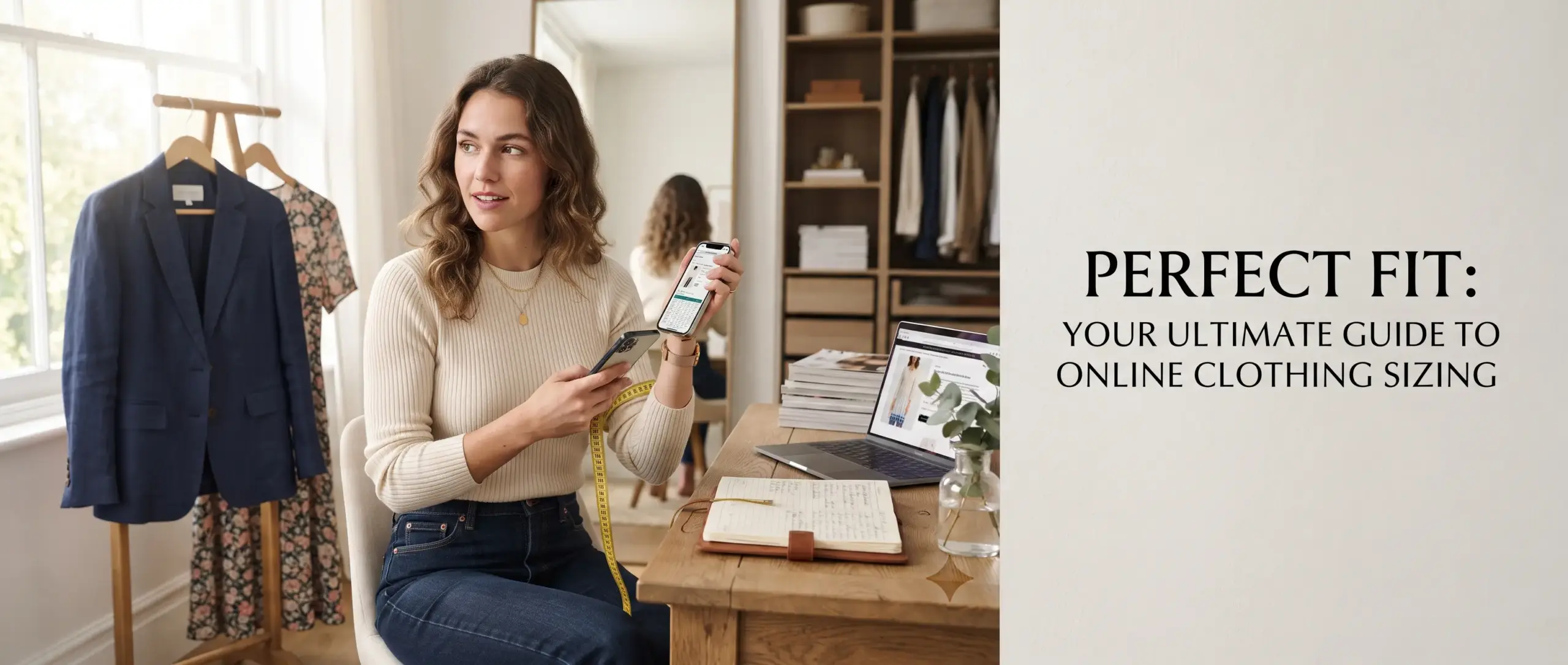 clothing size when shopping online
Online fashion shopping offers unmatched convenience, endless variety, and access to styles from around the globe right at your fingertips. Yet, despite all these perks, one major hurdle remains a persistent headache for fashion lovers: finding the right clothing size when shopping online.
We have all experienced that moment of anticipation while waiting for a package to arrive, only to open it and discover that a pair of jeans is uncomfortably tight or a tailor-fitted blazer hangs off your shoulders like a tent. Because you cannot try on garments in a physical fitting room, ordering clothes over the internet often feels like a guessing game. A size medium in one brand might fit like a small in another, while a European size 40 bears little resemblance to an American size 10.
Fortunately, achieving a flattering, comfortable fit does not require luck. Understanding your personal measurements is also an important part of building a reliable wardrobe foundation, similar to choosing the right wardrobe essentials. By understanding how brand sizing works, taking accurate body measurements, and learning how to read fit guides properly, you can take control of your digital wardrobe choices. Here is your ultimate guide to selecting the correct clothing size every single time you shop online.
Why Clothing Sizes Vary So Dramatically Across Brands
To solve the puzzle of online sizing, it helps to understand why a single standard size does not exist across the apparel industry.
The Evolution of Vanity Sizing
Over the past few decades, many apparel manufacturers shifted their sizing specs upward—a process commonly known as vanity sizing. A size 6 dress today is considerably larger in physical dimensions than a size 6 dress produced twenty or thirty years ago. Brands often alter their charts to make shoppers feel smaller, which boosts customer confidence and loyalty. However, because each brand adjusts its numbers independently, standard labels like Small, Medium, and Large have lost their objective meaning.
Regional and Cultural Differences
Global fashion manufacturing means you are likely buying garments designed for different regional populations.
- American brands generally cut garments with a more generous, relaxed fit through the chest, waist, and hips.
- European brands (especially Italian and French labels) tend to favor a leaner, narrower silhouette through the shoulders and torso.
- Asian brands often design for smaller frames, featuring shorter sleeve lengths, narrower shoulder seams, and shorter rise heights on trousers.
Production and Cutting Tolerances
Even within the exact same brand and style line, minor variations occur. During mass production, factories stack dozens of layers of fabric and cut them simultaneously with industrial machinery. The top layers may end up slightly larger or smaller than the bottom layers. A normal manufacturing variance of a quarter-inch to a half-inch can easily change how a tailored garment feels on your body.
Essential Tools to Prepare Before You Shop
Before clicking “Add to Cart,” set up your home fitting Toolkit. Having the right tools on hand removes the guesswork and gives you concrete numbers to work with.
- A Flexible Soft Measuring Tape: Avoid using a stiff metal tape measure designed for home hardware tasks, as it cannot curve around your body accurately. Opt for a tailor’s flexible vinyl or cloth measuring tape.
- A Measurement Journal or Note App: Keep a dedicated note on your phone or notepad listing your latest metrics in both inches and centimeters.
- A Well-Fitting Garment from Your Wardrobe: Keep your absolute favorite pair of jeans, button-down shirt, or dress handy. Measuring a piece of clothing that already fits you perfectly provides a brilliant shortcut when evaluating product charts online.
- A Full-Length Mirror: Standing in front of a mirror ensures your measuring tape remains straight, flat, and parallel to the floor around your back.
How to Take Accurate Clothing Measurements at Home
Taking exact clothing measurements is the absolute foundation of successful online fashion shopping. To get the cleanest baseline, wear light undergarments (or thin form-fitting activewear) and stand naturally with relaxed posture. Avoid holding your breath, pulling your stomach in, or pulling the tape measure too tight. The tape should rest snugly against your skin without digging into your flesh.
Upper Body Measurements
Bust and Chest
For women, wrap the tape around the fullest part of your bust, keeping the tape level across your back and under your arms. For men, bring the tape across the broadest part of your chest, running just under the armpits and over the shoulder blades.
Underbust (For Bras and Fitted Tops)
Measure directly under your bust, right around your ribcage where a bra band or empire waistline sits. Make sure the tape is flat and snug.
Shoulders
Measure across the back from the outer edge of one shoulder bone to the outer edge of the other. This measurement is crucial when buying structured blazers, denim jackets, or tailored coats.
Sleeve Length
Place one end of the tape at the center back of your neck, run it across your shoulder, and down along your slightly bent elbow to your wrist bone. This gives you an accurate length for long-sleeved dress shirts and outerwear.
Lower Body Measurements
Natural Waist
Bend sideways to find the natural crease of your torso—this is your natural waist, typically located an inch or two above your belly button. Wrap the tape around this narrowest point.
Low Waist / High Hip
For low-rise or mid-rise pants, measure around your torso where you actually prefer your pants waistband to sit, which is usually a few inches below your natural waistline.
Hips and Seat
Stand with your feet together and wrap the tape around the fullest part of your hips and buttocks. Ensure the tape stays completely parallel to the floor all the way around.
Inseam
The inseam measures the length from your crotch seam down the inner leg to the bottom of your ankle bone. You can measure this on your body, but it is often much easier to lay your favorite pair of pants flat on a table and measure along the inner leg seam from crotch to hem.
Thigh Circumference
Wrap the tape around the fullest part of your upper thigh, just below the crotch. This step is particularly helpful for non-stretch denim, trousers, or athletic pants.
For more detailed guidance on taking accurate body measurements, you can also refer to professional apparel measurement resources such as the ASTM apparel and textile standards resources.
Mastering the Art of Reading an Online Size Guide
Once you have your numbers written down, you need to translate them using the retailer’s fit guide. However, not all online charts present information in the same way. Knowing how to read between the lines makes all the difference.
Body Measurements vs. Finished Garment Measurements
This distinction trips up countless online shoppers.
- Body Measurement Charts show the physical body dimensions that the size is designed to fit.
- Finished Garment Measurements show the actual dimensions of the finished fabric when laid flat.
If a dress size chart lists a 36-inch chest using finished garment measurements, and your chest measures exactly 36 inches, that dress will sit skin-tight with zero room to move or breathe.
Understanding Garment “Ease”
Ease is the extra space built into a garment beyond your physical body size to allow for movement, comfort, and silhouette style.
- Fitting Ease: The minimal clearance required for basic bodily movements like sitting, bending, and reaching. Woven, non-stretch items require at least 1 to 2 inches of ease at the chest and hips.
- Design Ease: The intentional extra room added by the fashion designer to create a specific look. An oversized sweater or boyfriend blazer will feature high design ease, meaning the garment dimensions will be significantly larger than your body metrics.
When reading an online size guide, check whether the retailer provides body specs or garment specs. If they provide garment specs, remember to factor in ease depending on how tight or loose you want the garment to fit.
Converting International Sizes
When purchasing from international boutique websites, sizing labels vary greatly:
For additional reference on international clothing measurement standards, you can review the ISO sizing system information used for garment size designation.
- United States: Numeric sizes typically run in even numbers (0, 2, 4, 6, 8, etc.).
- United Kingdom & Australia: UK/AU sizes generally run four numbers higher than US sizing (a US size 4 is roughly equivalent to a UK size 8).
- Continental Europe (EU): European sizing adds 32 to US numbers (a US size 6 equates to an EU 38).
- Japan and East Asia: Sizing often uses single numbers (1, 2, 3) or simplified letter tags that run significantly smaller than Western equivalents.
Never rely solely on conversions. Always cross-reference your actual inch or centimeter measurements against the brand’s specific chart.
Fabric, Stretch, and Cut: The Hidden Factors of Fit
Two garments with identical size charts can fit completely differently depending on their fabric composition and structural cut.
Fabric Composition and Fiber Content
Always check the product description for the material blend before deciding on a correct clothing size:
- Stretchy Fabrics (Elastane, Spandex, Lycra): Clothes featuring 2% to 5% elastane offer generous stretch and flexibility. If your measurements fall right on the border between two sizes in a stretchy fabric, you can usually select the smaller size for a sleek silhouette.
- Rigid Fabrics (100% Cotton, Linen, Raw Denim, Silk): Non-stretch fabrics have zero give. If you fall between sizes, always size up to ensure freedom of movement.
- Knitwear (Wool, Cashmere, Ribbed Knits): Knits naturally stretch and drape over body curves, providing more forgiving size ranges.
- Woven Fabrics (Poplin, Twill, Taffeta): Wovens hold a structured shape and require precise sizing around your broadest points.
Fabric Shrinkage
Keep natural fibers in mind during online fashion shopping. Unwashed 100% cotton, linen, and wool garments tend to shrink slightly after their initial washing and drying cycles. If a garment is tailored snugly out of the box, a single laundering session might make it too small. Allow a little extra room for natural fabrics that are not pre-shrunk.
Garment Silhouettes and Cuts
Pay attention to descriptive cut terms listed in product details:
- Slim Fit / Tailored: Cut closer to the body with less ease. Consider sizing up if you prefer a relaxed feel.
- Regular / Classic Fit: Traditional cut allowing normal movement ease. Stick to your true measured size.
- Relaxed / Oversized: Intentionally roomy. If you dislike excessive volume, you may want to size down.
Leveraging Customer Reviews and Model Specifications
Modern e-commerce platforms offer rich user data that helps narrow down your perfect fit beyond basic numbers.
Analyzing Model Statistics
Most major fashion sites list the height and frame details of their product models (e.g., “Model is 5’9″ and wearing a size Small”). Compare the model’s height to your own:
- If a dress hits above the knee on a 5’10” model, it will likely sit at or below the knee on someone who is 5’3″.
- Pay attention to torso length and arm length when reviewing tops and dresses on tall models.
User Reviews and Photo Feedback
Customer reviews are a goldmine of real-world fit information. Look for patterns in buyer feedback:
- Do multiple reviewers mention that the shoes run narrow?
- Are customers reporting that the waist band stretches out after an hour of wear?
- Is there a consensus that the shoulders run small?
Many platforms allow shoppers to filter reviews by their own height, weight, and normal size. Look at user-submitted photos to see how the fabric drapes on real body types rather than professionally styled studio models.
How to Build Your Personal Online Shopping Cheat Sheet
To streamline your online fashion shopping experience for the long haul, create a dedicated fit reference sheet.
Document Your Favorite Brand Profiles
Every fashion retailer has a distinct fit profile. Once you successfully order from a brand, record how their sizing fits your body. Note down:
- Brands where you are consistently a Medium.
- Brands where you need to size up in pants due to narrow hip cuts.
- Brands with extra-long sleeve lengths that suit your arms.
Compare Flat Garment Measurements
When shopping for structured items like denim or wool coats, take out a garment from your closet that fits you perfectly. Lay it completely flat on a bed or table and measure:
- Across the chest (armpit to armpit)
- Across the waistband
- The front rise (from crotch seam to top of waistband)
- Total garment length
When you shop online, compare these flat measurements directly against the item’s flat garment specs. This single habit eliminates the vast majority of sizing mistakes.
What to Do When You Fall Between Sizes
It is completely normal for your measurements to span across two different sizes on a chart. For instance, your bust might align with a size Medium, while your waist points to a size Large. Here is how to handle split measurements gracefully:
- Prioritize the Restrictive Area: Base your size selection on the most structured or unyielding part of the garment. For a bodycon dress or pencil skirt, match your hip measurement. For a fitted button-down shirt, prioritize your bust and shoulder width.
- Consider the Silhouette: For loose, flared A-line dresses, your hip measurement matters far less than your bust measurement. For wide-leg trousers, focus on waist fit rather than hip width.
- Factor in Tailoring Potential: It is far easier and cheaper for a local tailor to take in a garment that is slightly too large than to expand a garment that is too tight. When in doubt on a structured investment piece, order the larger size and have it custom-tailored to your body.
- Check the Return Policy: If you are torn between two sizes and the retailer offers free returns, consider ordering both sizes to try on at home. Return the ill-fitting option right away. Just make sure to read the merchant’s return window and conditions first.
Smart Checklist for Finalizing Your Order
Before hitting the final checkout button, run through this quick mental checklist to ensure you have chosen the right clothing size when shopping online:
- Have I checked my updated body measurements against this brand’s specific size chart rather than relying on standard letter tags?
- Is the garment made from rigid non-stretch fabric or stretchy blended material?
- Did I read customer reviews to see if the item runs true to size, small, or large?
- Does the silhouette match my personal fit preference (fitted vs. oversized)?
- Have I reviewed the store’s return and exchange policy in case the fit needs adjusting?
Shopping for fashion online does not have to feel like a game of chance. By relying on a soft measuring tape, understanding garment ease, paying attention to fabric blends, and reading user feedback, you can build a stylish, perfectly fitted wardrobe with complete confidence. Taking two minutes to check your numbers before buying saves hours of return hassles later, giving you a seamless online shopping experience every single time.
Frequently Asked Questions
How do I accurately measure myself to find my correct clothing size when shopping online?
Finding your correct clothing size starts with taking precise body measurements. Use a flexible fabric measuring tape to record three main areas: bust or chest, waist, and hips. For the chest, measure around the fullest part while keeping the tape parallel to the floor. For the waist, measure at your natural waistline, which is usually the narrowest part of your torso. For the hips, stand with your feet together and measure around the fullest part of your seat. Keep these recorded numbers nearby whenever you engage in online fashion shopping. Comparing your unique clothing measurements against a store’s specific online size guide is the most reliable way to ensure a flattering fit every time.
Why do clothing sizes vary so much between different online brands?
Selecting the right clothing size when shopping online can feel challenging because there is no universal sizing standard across the garment industry. Brands design their apparel using different fit models, target demographics, and regional standards. For instance, European brands frequently run slimmer than American retailers, while vanity sizing causes some manufacturers to label larger items with smaller size numbers. To navigate these discrepancies successfully, never rely solely on generic tags like “Medium” or “Size 8.” Instead, always consult the retailer’s unique size chart for that specific garment. Checking customer reviews and user photos also provides valuable real-world context on whether an item runs small, large, or true to size.
What is the difference between a general size chart and a product’s fit guide?
Understanding the distinction between a general size chart and a specific fit guide is essential for successful online fashion shopping. A standard size chart displays baseline body measurements designed for standard sizing categories. In contrast, a detailed fit guide provides the exact finished dimensions of the garment itself, including specific details like sleeve length, waist width, and inseam. A fit guide also explains the intended silhouette, such as relaxed, tailored, or oversized. Comparing these exact garment dimensions against a well-fitting piece of clothing you already own will help you select the ideal clothing size when shopping online without standard guesswork.
How can I use customer reviews to determine my ideal clothing size when shopping online?
Customer reviews are one of your most practical tools for choosing the correct clothing size when shopping online. Most e-commerce websites allow buyers to rate whether a garment runs small, large, or true to size. Look for detailed feedback submitted by reviewers who share your height, weight, and general body shape. Pay close attention to comments regarding fabric elasticity, potential shrinkage after washing, or tightness in key areas like the shoulders and thighs. If multiple customers report that an item shrinks or lacks stretch, ordering one size up will help ensure a comfortable fit.
What should I do if my body measurements fall between two sizes on an online size guide?
If your measurements fall between two options on an online size guide, determining your clothing size when shopping online depends heavily on fabric type and personal preference. For structured, non-stretch materials like linen, heavy denim, or woven cotton, selecting the larger size usually offers better comfort and mobility. Conversely, for stretchy fabrics like knits, spandex blends, or performance activewear, choosing the smaller size often yields a smooth, tailored look. Additionally, consider how you intend to wear the piece, as items like winter coats require extra layering space. When in doubt, review the store’s return policy so you can order with total confidence.

Related Posts

Measure Yourself There is nothing quite like the thrill of

Best Home Delivery Courier Services in Bangladesh (2026 Guide) The

Responsible Online Shopping in Bangladesh Online fashion shopping has become
 WhatsApp
 Messenger
 Phone
Phone