
- What Makes Cotton a Household Favorite?
- Understanding Polyester: The Modern Synthetic Fiber
- Cotton vs Polyester: Head-to-Head Fabric Comparison
- Are Cotton-Polyester Blends the Sweet Spot?
- Practical Buyer's Guide: Choosing for Your Lifestyle
- Making the Right Choice for Your Daily Wardrobe
- Frequently Asked Questions
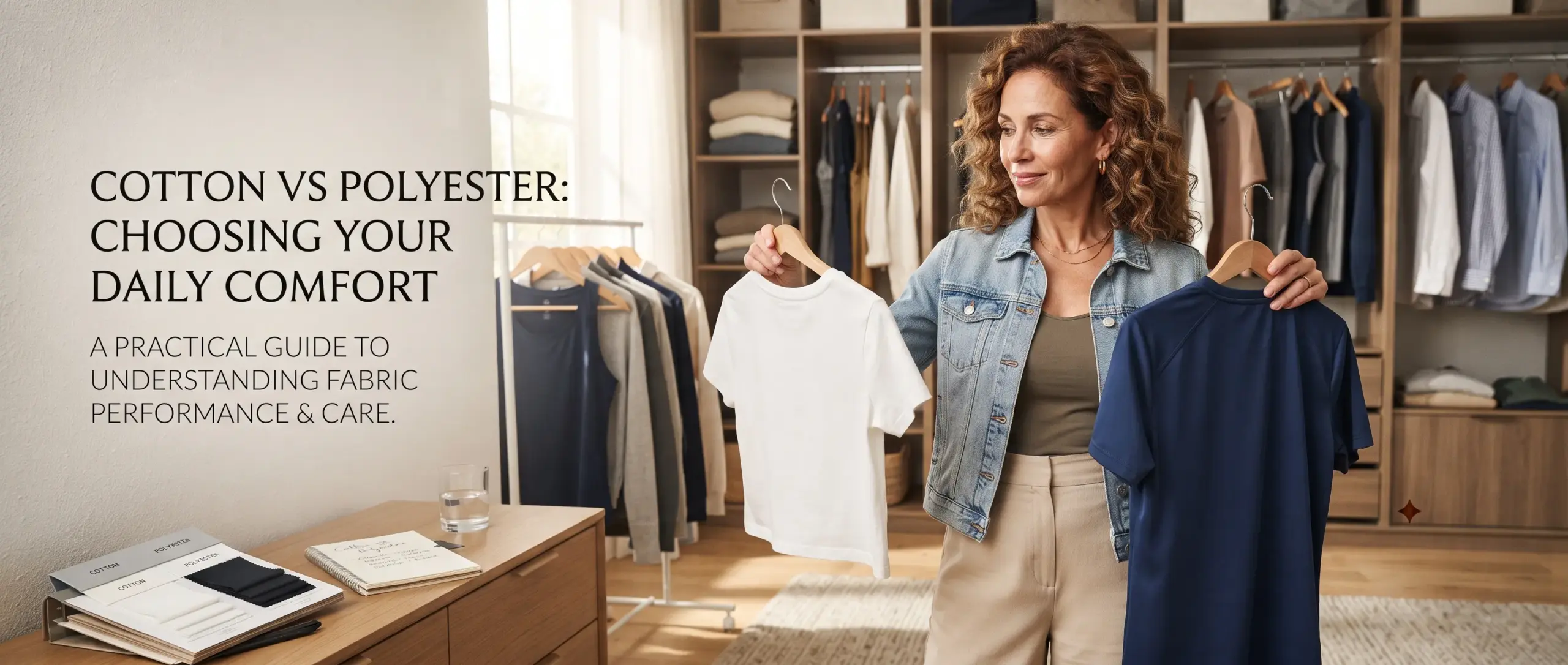 cotton vs polyester
Standing in front of your closet in the morning, picking out an outfit usually comes down to style and fit. Yet, the material touching your skin for the next twelve hours plays a much larger role in your daily comfort than you might realize.
Whether you are reaching for a crisp T-shirt, a classic button-down, or cozy loungewear, chances are high that your clothing is made of either cotton, polyester, or a combination of both.
Choosing between these two textile giants can feel confusing. Cotton is celebrated as a timeless natural fiber, while polyester dominates modern performance wear and affordable fashion. So, when evaluating cotton vs polyester for your everyday wardrobe, which material actually comes out on top?
To answer that, we need to look beyond the clothing tags and explore how these everyday fabrics perform across breathability, durability, comfort, maintenance, and environmental impact.
What Makes Cotton a Household Favorite?
Cotton has been cultivated and woven into garments for thousands of years, earning its reputation as the benchmark for natural comfort. Derived from the fluffy seed bolls of the cotton plant, this organic textile is made almost entirely of pure cellulose.
The structure of cotton fibers gives the material its distinct soft feel and high absorbency. Because it is a natural material, cotton fabric allows air to circulate freely through the weave, making it one of the premier choices for breathable clothing.
The Pros of Wearing Cotton
- Exceptional Softness: Cotton offers a gentle, natural texture that feels smooth against the skin from the very first wear. Unlike synthetic materials, it does not typically produce static electricity or feel abrasive.
- High Breathability: Air flows easily through natural cotton fibers. This ventilation allows body heat to escape, keeping you cool during warm weather or light daily activity.
- Hypoallergenic Qualities: Cotton is generally considered gentle on sensitive skin and is often preferred by people who experience irritation from some synthetic fabrics. It is widely recommended for individuals with sensitive skin, eczema, or allergies.
- No Odor Retention: Natural fibers tend to release trapped odors during a standard wash cycle far more effectively than synthetic fibers. Cotton garments generally stay smelling fresh after washing.
The Drawbacks of Pure Cotton
- Absorbs and Retains Sweat: While cotton absorbs moisture quickly, it holds onto that wetness rather than evaporating it. A heavy cotton shirt will feel damp and heavy once you begin to sweat.
- Prone to Shrinkage: Unprocessed or non-pre-shrunk cotton is vulnerable to heat. Washing or drying cotton clothes at high temperatures often causes the natural fibers to contract and shrink.
- Wrinkles Easily: Cotton lacks natural elastic recovery. Garments made from 100% cotton fold and crease easily, requiring regular ironing or steaming to maintain a crisp appearance.
- Slower Drying Time: Because cotton retains water deep within its cellular structure, damp cotton clothing takes significantly longer to air-dry compared to synthetic textiles.
Understanding Polyester: The Modern Synthetic Fiber
Polyester entered the fashion world in the mid-20th century as a revolutionary synthetic material designed for resilience and low maintenance. Unlike natural plant fibers, polyester fabric is a man-made polymer derived primarily from petroleum products (specifically polyethylene terephthalate, or PET).
Through chemical processes, molten plastic is extruded through tiny nozzles to create fine, incredibly strong synthetic threads. These threads are then woven into fabrics that resist stretching, shrinking, and creasing.
The Pros of Polyester Garments
- Remarkable Durability: Polyester fibers are exceptionally strong and resistant to abrasion, tearing, and everyday wear and tear. If you are looking for durable clothes that withstand hundreds of wash cycles without fraying, polyester is a strong candidate.
- Moisture-Wicking Properties: Instead of absorbing water, polyester repels it. The hydrophobic nature of synthetic fibers allows moisture to move to the outer surface of the fabric, where it evaporates quickly.
- Wrinkle and Shrink Resistance: Polyester holds its shape remarkably well. It naturally resists creasing, holding its structural form throughout the day without requiring an iron.
- Lightweight and Fast-Drying: Because polyester does not absorb liquid into its core, garments wash quickly and dry in a fraction of the time natural fibers require.
The Drawbacks of Polyester
- Limited Airflow: Standard polyester weaves trap heat and moisture against the skin more readily than open natural weaves. In hot, non-ventilated environments, pure polyester can feel warm and clammy.
- Odor Trapping: Synthetic fibers tend to bond with body oils and bacteria. Over time, sports clothing made of lower-grade polyester can develop a lingering odor known as “permastink” that requires specialized washing techniques to eliminate.
- Static Electricity Build-Up: Polyester generates static cling easily, especially in dry winter environments or after being tumble-dried.
- Synthetic Texture: High-quality polyester can feel smooth, but low-quality polyesters often feel slippery, artificial, or scratchy compared to soft natural cotton.
 fabric comparison
Cotton vs Polyester: Head-to-Head Fabric Comparison
To determine which textile fits your daily routine, it helps to compare their performance across key everyday factors.
1. Breathability and Temperature Control
If your primary goal is staying cool and comfortable during a routine day, natural fibers usually take the lead. Cotton provides direct airflow, allowing your skin to breathe naturally. It is ideal for casual walking, relaxing at home, or working in mild to warm conditions.
Living in a hot and humid country like Bangladesh, many people notice the difference immediately: a cotton T-shirt often feels cooler during daily activities, while polyester sportswear feels more comfortable during exercise because it helps move sweat away and dries faster.
Polyester, by contrast, acts more as a barrier to air unless engineered into a loose, technical mesh. Plain polyester weaves tend to trap body heat, which can cause you to feel warmer during low-impact daily wear.
- Winner for casual comfort: Cotton
2. Moisture Handling: Absorbing vs. Wicking
The key distinction in moisture handling comes down to absorbency versus wicking ability:
- Cotton is hydrophilic (water-loving): It pulls moisture away from your skin, but holds it inside the fabric. This makes cotton feel heavy, damp, and chilly if you sweat heavily.
- Polyester is hydrophobic (water-repelling): It does not absorb sweat into its fibers. Instead, it pushes wetness to the garment’s surface to dry rapidly.
For light activity, cotton’s moisture absorption feels completely fine. But for high humidity, heavy perspiration, or athletic performance, polyester’s moisture-wicking capabilities make it the functional choice.
- Winner for active use and heavy sweating: Polyester
3. Durability and Fabric Lifespan
When comparing long-term wear, polyester is noticeably more resilient than cotton. Cotton fibers gradually break down over time due to mechanical friction, repeated laundering, and sun exposure, leading to fading, pilling, and eventual thinning.
Polyester fibers resist stretching, snapping, and fading. Colors stay vibrant longer on synthetic garments, and the fabric resists the thinning effect common in old cotton tees.
- Winner for long-lasting wear: Polyester
4. Skin Sensitivity and Texture
Cotton is often preferred for sensitive skin because of its softness and breathability. For information about textile safety certifications, see OEKO-TEX textile standards. Natural organic fibers interact gently with human skin, producing virtually no static friction.
Polyester can sometimes irritate sensitive skin, particularly when heat and sweat are trapped against the body under synthetic weaves.
- Winner for skin comfort: Cotton
5. Maintenance and Ease of Care
Living a busy lifestyle often means wanting low-maintenance wardrobe items.
100% cotton requires deliberate care: it can shrink in hot water, fade under harsh detergents, and often needs ironing after washing.
Polyester is virtually hassle-free. It can handle regular machine washing, rarely shrinks, dries rapidly on low heat, and comes out of the dryer ready to wear without a single wrinkle.
- Winner for hassle-free care: Polyester
6. Environmental and Sustainability Impact
Evaluating the environmental footprint of a fabric comparison involves weighing distinct trade-offs:
- Cotton: Being a natural plant fiber, cotton is biodegradable. However, conventional cotton farming can require significant water, pesticides, and land resources unless sourced from sustainable or organic farming practices.
- Polyester: As a petroleum-based synthetic plastic, conventional polyester is non-biodegradable and releases microplastics into wastewater during laundering. However, recycled polyester (rPET) made from post-consumer plastic bottles is increasingly common and reduces dependence on virgin crude oil. Learn more about sustainable textile practices from Textile Exchange.
From a long-term waste perspective, natural cotton breaks down cleanly at the end of its life, giving it an edge in raw biodegradability.
- Winner for natural biodegradability: Cotton
Are Cotton-Polyester Blends the Sweet Spot?
Because cotton and polyester possess opposite strengths and weaknesses, textile manufacturers frequently combine them to create balanced blend fabrics. The most common mix is a 60/40 or 50/50 ratio, often labeled as CVC (Chief Value Cotton) or Poly-Cotton.
By blending the two fibers, you get a garment that captures the best qualities of each material:
- Softness with Strength: The cotton content preserves a soft, natural hand-feel, while the polyester adds structural strength.
- Reduced Shrinkage and Wrinkling: The presence of polyester stabilization keeps the cotton from shrinking drastically in the wash or creasing heavily during wear.
- Improved Drying Speed: Blends dry significantly faster than pure cotton while offering better breathability than pure polyester.
- Budget-Friendly Durability: Poly-cotton tees and hoodies maintain their color and shape over dozens of laundry cycles at an accessible price point.
For many people, cotton-polyester blends offer the ideal middle ground for everyday t-shirts, hoodies, casual dress shirts, and work uniforms.
Practical Buyer’s Guide: Choosing for Your Lifestyle
Rather than declaring one material absolute king, the ideal fabric depends heavily on where and how you plan to wear it.
Choose Cotton If You Need:
- Everyday Casualwear: Simple graphic tees, casual loungewear, and pajamas where pure skin comfort is your top priority.
- Sensitive Skin Solutions: Underwear, undershirts, and base layers that will not chafe or irritate allergic skin.
- Hot, Dry Summer Days: Crisp linen or cotton shirts that maximize natural air circulation when humidity is low.
- Odor-Free Wardrobe Staples: Items you plan to wear multiple times between washes without retaining lingering body odors.
Choose Polyester If You Need:
- Athletic and Fitness Wear: Running shirts, gym shorts, and performance layers designed to wick sweat and dry fast.
- Travel wardrobe essentials: Clothes packed tightly into luggage that need to unroll completely wrinkle-free.
- Outerwear and Bad-Weather Gear: Jackets, windbreakers, and rainwear that require water resistance and wind protection.
- High-Wear Work Uniforms: Garments subjected to heavy friction, industrial washing, or rough physical work.
Making the Right Choice for Your Daily Wardrobe
When comparing cotton vs polyester, neither material is universally superior. Instead, each serves a distinct purpose in a well-balanced wardrobe.
Natural cotton fabric remains unmatched for raw comfort, soft texture, breathability, and skin-friendly properties. It is the gold standard for relaxing at home, casual weekend outings, and everyday base layers. On the flip side, synthetic polyester fabric dominates when durability, wrinkle resistance, rapid drying, and moisture management matter most.
If you are building an everyday wardrobe, look for a healthy mix of both. Keep 100% natural cotton close to your skin for quiet days and sleeping, rely on polyester for workouts and travel, and embrace cotton-polyester blends for long-lasting, low-maintenance casual clothing. By matching the fabric’s natural qualities to your daily activities, you can ensure your clothes keep you comfortable, cool, and looking great all day long.
Frequently Asked Questions
Which fabric is overall better for casual everyday wear?
Choosing between cotton vs polyester for casual everyday wear depends largely on your personal lifestyle and comfort preferences. Natural cotton fabric offers unbeatable softness and breathability, making it ideal for relaxed daily activities, loungewear, and basic t-shirts. On the other hand, polyester fabric excels in shape retention, wrinkle resistance, and quick-drying capabilities, which suits fast-paced schedules. Many people consider both to be essential everyday fabrics because they serve different daily needs. If your priority is skin-friendly comfort during low-impact days, cotton is typically the superior choice. However, if you need low-maintenance clothing that resists shrinking and fading after repeated washings, polyester takes the lead.
Is cotton or polyester a better choice for hot weather and sweating?
When tackling hot weather, natural cotton fabric generally wins the debate for breathable clothing. Cotton allows air to circulate freely through its fibers, absorbing sweat away from your body to keep you feeling fresh and cool during humid days. Conversely, synthetic polyester fabric does not breathe as naturally, which can trap body heat and moisture against your skin. However, polyester boasts moisture-wicking properties that push sweat to the surface where it evaporates rapidly. In the ultimate cotton vs polyester heat comparison, pure cotton remains the most comfortable choice for light everyday activities in high temperatures, whereas lightweight polyester is preferred for intense summer workouts where rapid drying is required.
How do cotton and polyester compare in terms of durability and long-term wear?
In any thorough fabric comparison, synthetic polyester fabric easily outmatches natural fibers when it comes to longevity. Polyester is constructed from strong, resilient synthetic fibers that resist stretching, shrinking, fading, and tearing even after hundreds of wash cycles. This strength makes it an ideal material for durable clothes like jackets, outerwear, and activewear that endure heavy daily use. While pure cotton fabric is remarkably soft and comfortable, its natural fibers tend to break down, shrink, or thin out over extended periods. In the battle of cotton vs polyester durability, polyester provides superior resistance to daily wear and tear, ensuring your favorite garments maintain their original shape and vibrant color for years.
Which fabric is easier to wash, dry, and maintain daily?
When evaluating everyday fabrics based on maintenance, polyester fabric is significantly easier to care for than traditional cotton fabric. Polyester resists wrinkling, shrinking, and staining naturally, allowing you to wash and tumble dry garments without worrying about structural damage or tedious ironing. Conversely, 100% cotton garments require more attentive care, as they can easily shrink in hot water and wrinkle severely if left in the dryer. In terms of daily convenience in the cotton vs polyester debate, polyester emerges as the hands-down winner for busy individuals. You can simply toss polyester clothing into the washing machine, dry it on low heat, and wear it immediately without hassle.
Which fabric is safer and more comfortable for sensitive skin?
For individuals with sensitive skin, allergies, or eczema, pure cotton fabric is overwhelmingly recommended over synthetic materials. Cotton is a hypoallergenic, organic fiber that feels naturally gentle against delicate skin without causing friction or irritation. It provides soft, breathable clothing that allows the skin to breathe freely throughout the day, preventing heat rash and irritation caused by trapped moisture. Synthetic materials like polyester can sometimes trap sweat, bacteria, and residual laundry detergent near the skin, potentially triggering unpleasant reactions or odors. When analyzing cotton vs polyester for sensitive skin concerns, natural cotton remains the safest and most soothing textile choice for everyday undertops, sleepwear, and casual attire.
How do cotton and polyester perform during athletic or physical activities?
A quick fabric comparison reveals that polyester fabric is the clear standard for athletic and high-movement activities. Polyester possesses excellent moisture-wicking technology, pulling sweat away from the body to the outer surface of the garment for rapid evaporation. This process keeps you dry, light, and comfortable during intense exercise or outdoor labor. In contrast, cotton absorbs heavy moisture and retains wetness, becoming heavy, soggy, and prone to chafing during physical exertion. Therefore, when weighing cotton vs polyester for workout gear or activewear, lightweight and durable clothes made of polyester are undeniably better suited to manage sweat, support freedom of movement, and maintain structural integrity during performance.
Are cotton-polyester blend fabrics better than pure 100% single-fiber garments?
For many consumers, cotton-polyester blended fabrics offer the best of both worlds by combining the top characteristics of both materials. A typical 50/50 or 60/40 cotton-poly blend pairs the breathable clothing feel and softness of cotton with the wrinkle resistance and longevity of polyester. These blended everyday fabrics create durable clothes that do not shrink easily, resist color fading, and feel comfortable against the skin throughout long days. If you find yourself undecided in the cotton vs polyester debate, opting for a quality blend provides a balanced solution. Blended garments offer practical everyday wearability, straightforward laundering, and enhanced durability without sacrificing essential daily comfort.
Which fabric choice is more environmentally friendly for long-term everyday use?
Environmental impact is a complex topic in any honest fabric comparison between natural and synthetic textiles. Natural cotton fabric is biodegradable and renewable, but conventional cotton farming requires high volumes of water, land, and pesticides unless sourced organically. Conversely, polyester fabric is a petroleum-based synthetic material that does not biodegrade naturally and releases microplastics into waterways during washing. However, modern recycled polyester options are improving sustainability by repurposing plastic waste into long-lasting garments. Ultimately, evaluating cotton vs polyester for eco-friendliness involves balancing cotton’s natural biodegradability against polyester’s extended lifespan, though choosing organic cotton or recycled polyester represents the greenest approach for conscious shoppers. You can explore certified organic textile information through Global Organic Textile Standard (GOTS).

Related Posts

Stains From Clothes Safely We have all experienced that stomach-dropping

how to wash cotton clothes There is nothing quite like

how to read clothing labels We have all been there:

how to identify quality clothing Have you ever bought a
 WhatsApp
 Messenger
 Phone
Phone